
TECHDADA
We will choose best phone for you


 |  |  |
|---|---|---|
 |
REDMI NOTE 5 PRO
SPECIFICATION
Body: Plastic + Aluminum
Screen: 5.99-inch, 2160x1080 IPS LCD, 403 PPI
Rear Camera: 12MP (1.25μm), f2.2, Sony IMX 486 PDAF primary, 5MP (1.12μm), f2.0, Samsung depth sensor; 1080p video
Front Camera: 20MP (1.0μm), f2.2 Sony IMX 376, LED flash; 1080p video
Chipset: 14nm Qualcomm Snapdragon 636, Kryo 260 (4x Cortex-A73 @ 1.8GHz + 4x Cortex-A53 @ 1.6GHz), Adreno 509
Memory: 4/6GB LPDDR4X, 64GB eMMC 5.0 + microSD (up to 128GB)
OS: Android 7.1.1; MIUI 9
Battery: 4000mAh; Quick Charge 2.0
Connectivity: Hybrid dual SIM (4G+3G), 4G VoLTE, dual-band Wi-Fi 802.11ac, Bluetooth 5.0, GPS/GLONASS/BeiDou, Wi-Fi Direct, FM Radio, IR blaster, microUSB, headphone jack
Misc: Fingerprint sensor, face unlock (coming later)
REVIEW
The Redmi Note 5 Pro is Xiaomi's latest smartphone, just recently introduced to the Indian market alongside the cheaper Redmi Note 5. While the company does sell more expensive models, the Redmi Note series has always been its best-selling and most important range.
This year, the company has upped the ante significantly in terms of features, something the value conscious Asian markets are sure to find exciting.
We have a taller aspect ratio display, new cameras on the front and back, a powerful new processor, faster memory and the same big battery that the series has come to be known for. If the competition isn't already worried, it should be.
As you can see, Xiaomi is clearly not messing around this year. The jump to a Snapdragon 636 alone puts it in a different league compared to its competition. It has also been paired with LPDDR4X memory, which is only seen in high-end devices. Lastly, the phone also has one of the best cameras Xiaomi has shipped on a phone.
NOKIA 6.1 PLUS



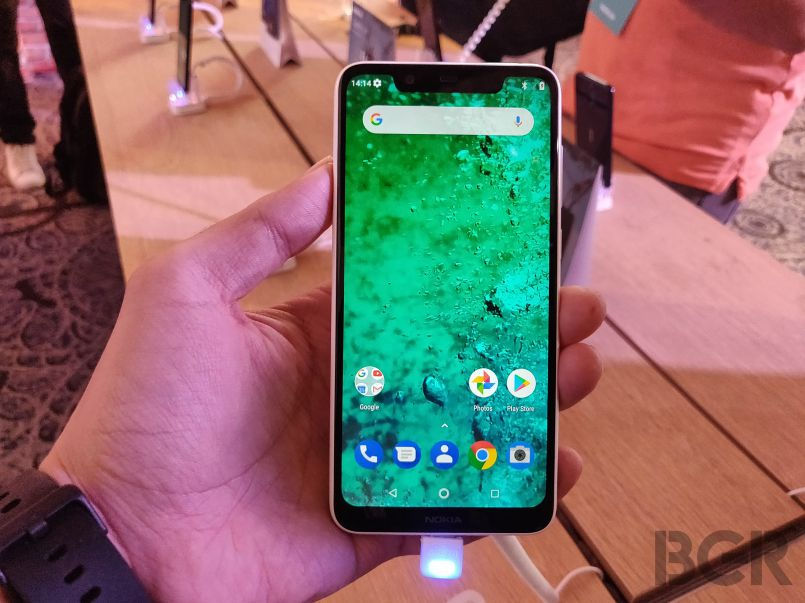
Review
Nokia's return to the smartphone market with Android hasn't exactly set the sales charts on fire, but the company has steadily been making progress, with a constant stream of new and relevant devices. The latest one we have today is the Nokia 6.1 Plus, an entrant in the ever-popular mid-range segment.
Even though it shares most of its name with the Nokia 6.1, don't let that fool you into thinking the 6.1 Plus is some sort of larger version of that. This is very much a different phone altogether, one that feels much more modern than the 6.1 even though it's only a few months newer.
Yes, we are talking about the notch design. Love it or hate it, the notch seems to be the trend for 2018 and Nokia is fully onboard. However, unlike others, Nokia has chosen to do this with its mid-range offering, which makes it one of the few in this segment to sport this design.
Specification
Body: Aluminum frame, Corning Gorilla Glass 3 front and back
Display: 5.8-inch, 2280x1080, 19:9 IPS LCD with notch
Rear Camera: 16MP f2.0 + 5MP f2.4 depth sensor, two tone LED flash, 4K30 video, EIS (1080p only)
Front Camera: 16MP f2.0 fixed focus, 1080p video
OS: Android 8.1 Oreo (Android One)
Chipset: Qualcomm Snapdragon 636, 1.8GHz 8x Kryo CPU, Adreno 509 GPU
Memory: 4GB LPDDR4X, 64GB eMMC 5.1, microSD support (up to 400GB)
Battery: 3060mAh, Quick Charge support
Connectivity: Dual SIM (hybrid), LTE Cat. 4, Wi-Fi 802.11ac, Bluetooth 5.0, GPS/GLONASS, USB 2.0 Type-C, headphone jack
Misc: FM radio, fingerprint sensor
Looking at the specs, one can tell the Nokia 6.1 Plus is a decidedly mid-range offering, however, one with reasonably good specs that should make some sit up and take notice. The Snapdragon 636 chipset, for example, is reasonably powerful and 4GB LPDDR4X memory sounds generous. Then there's the glass and aluminum design and a dual rear camera system. Nokia is also sticking with Android One for this device, which means you can expect a stock Android experience with relatively quick updates.

ASUS ZENFONE MAX PRO
The ASUS ZenFone Max series has mostly been an underdog in the budget Android smartphone market. Although the devices pack sizable battery capacities, the rest of their features could rarely hold a candle to the benchmark in the segment, the Xiaomi Redmi Note.
Specification
Body: Plastic frame, aluminum back
Screen: 5.99-inch, 2160x1080 IPS LCD, 2.5D curved glass
Rear Camera: 13MP primary sensor, f2.2 aperture, PDAF, LED flash, DCI 4K video; 5MP secondary depth sensor, f2.4 aperture
Front Camera: 8MP sensor. f2.2 aperture, LED flash, 1080p video
Chipset: Qualcomm Snapdragon 636 (4x 1.8GHz Kryo 260 + 4x 1.6GHz Kryo 260; Adreno 509)
Memory: 32GB or 64GB eMCP storage (expandable to 2TB), 3GB or 4GB LPDDR4X RAM
OS: Android 8.1 Oreo
Battery: 5000mAh, 10W charging
Audio: Mono loudspeaker, headphone jack
Misc: Face unlock, fingerprint sensor
Colors: Black, Gray


The ZenFone Max Pro M1 is here to change exactly that. This time, ASUS is taking the fight to Xiaomi, with a feature-packed device that should make even the demanding users happy. Whether it's an 18:9 display, a Snapdragon 636 processor, dual rear cameras, and a massive 5000mAh battery. If that wasn't enough, ASUS has another trick up its sleeve; the ZenFone Max Pro comes with a stock build of Android 8.1 out of the box.
In other words, the ZenFone Max Pro M1 is fully loaded for a phone in this price range. The cherry on the top really is the stock Android OS, something a lot of people want but rarely ever get, especially in this segment. But now it's time to see if the ZenFone Max Pro is just a bunch of impressive sounding specifications or greater than the sum of its parts.


XAIOMI MI A2
Specification
Body: Aluminum body.
Display: 5.99" IPS LCD, 1,080x2,160px resolution, 18:9 aspect ratio, 403ppi.
Rear camera: Primary 12MP, Type 1/2.9" sensor, 1.25µm pixel size, f/1.75 aperture, PDAF; Secondary 20MP for low-light, Type 1/2.8" sensor, 1.0µm pixel size, f/1.75 aperture, autofocus, pixel binning. 2160p/30fps.
Front camera: 20MP, 1.0µm pixel size, f/2.2 aperture, Auto HDR, pixel binning. 1080p/30fps video recording.
OS: Android 8.1 Oreo (part of Android One).
Chipset: Qualcomm Snapdragon 660: octa-core CPU (4x2.2 GHz Kryo 260 & 4x1.8 GHz Kryo 260), Adreno 512 GPU.
Memory: 4/6GB of RAM; 32/64/128GB storage; no microSD slot.
Battery: 3,000mAh Li-Ion (sealed); QuickCharge 3.0 fast charging.
Connectivity: Dual-SIM; LTE, USB-C; Wi-Fi a/b/g/n/ac; GPS; Bluetooth 5.0, IR blaster.
Misc: Rear-mounted fingerprint reader; single down-firing speaker; no 3.5mm jack (adapter in the box).
Review
he Xiaomi Mi 6X has finally gone global and we have a play date with the international Mi A2. Some big shoes it has to fill - the Mi A1 was such a well-rounded yet affordable smartphone that it would regularly feature in our review conclusions as the main alternative for a wide range of competitors. Can the Mi A2 top that?
For one, this year's chipset is a notch (or several) up - the Snapdragon 625 in the Mi A1 was all about endurance, while the Snapdragon 660 in the Mi A2 is similarly frugal, only vastly more powerful.
Speaking of notches, there isn't one to spoil the top of the Mi A2's display. It's a contemporary 18:9 unit, the almost-6-inches in diagonal FullHD+ LCD that Xiaomi's already used on a bunch of smartphones. So, that's another one where A2>A1.
More of side step than a definitive improvement is the camera. Gone is the 12MP telephoto module that offered 2x zoom, substituted by a 20MP secondary camera for improved low-light performance (OnePlus-style). The main cam on the back is still 12MP, but now gets a 2/3 of a stop brighter lens (f/1.8 vs. f/2.2). Over on the front, a 20MP selfie cam (same sensor as the one on the rear) replaces the basic 5MP shooter of the Mi A1, and comes with an added flash too.